Garden of Life Vitamin Code Raw D3: What the Vitamin D3 Research Actually Shows
Vitamin D is one of the most commonly recommended supplements in the country, largely because so many adults — especially those who spend most daylight hours indoors, live at northern latitudes, or have deeper skin pigmentation — test low on standard bloodwork. Garden of Life's Vitamin Code Raw D3 is one of the better-known whole-food-based entries in the category, built around the brand's "raw" formulation approach rather than an isolated, synthetic-style D3 tablet. We read the label and checked what independent research says about vitamin D3 specifically, plus the one piece of dosing math worth doing before you commit to a bottle.
What's actually in the capsule
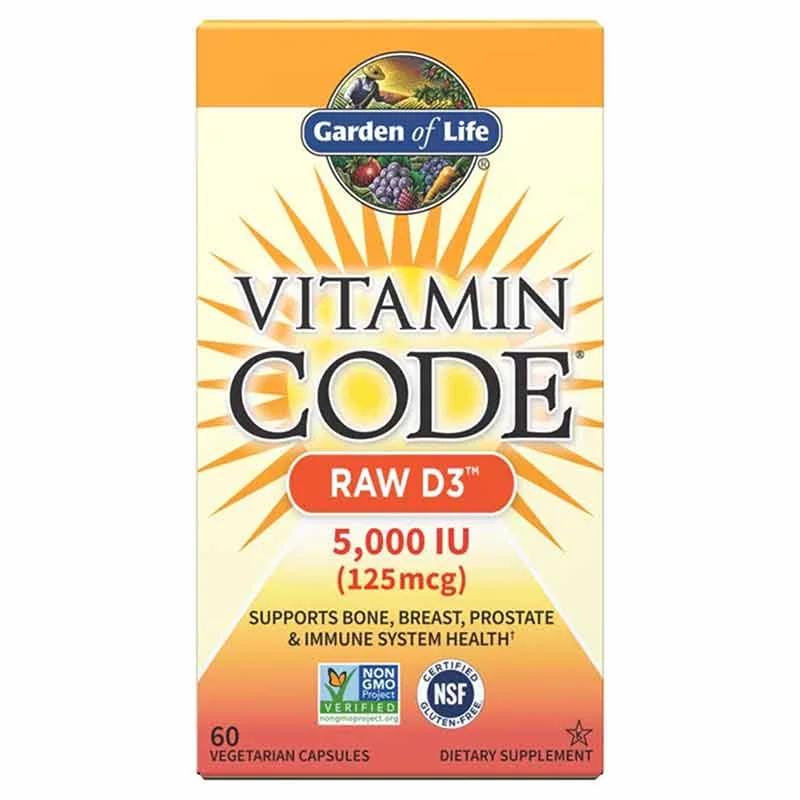
Per the product's own label, one vegetarian capsule is one serving, and this particular formulation delivers 125 mcg (5,000 IU) of vitamin D3 — 625% of the FDA's current daily value. Garden of Life also sells a lower-dose 2,000 IU (50 mcg) version of the same Vitamin Code Raw D3 line, so it's worth double-checking which strength is actually in the bottle you're looking at before you buy. The D3 is carried in what the brand calls a whole-food lipid base of cracked-wall chlorella, alongside a blend of 23 organically grown fruits and vegetables, live Lactobacillus probiotics, and digestive enzymes (protease, lipase, bromelain, lactase, and papain) meant to support digestion rather than the vitamin D dose itself. The only other listed ingredients are the vegetable cellulose capsule shell and organic rice hull.
The capsules are labeled vegetarian, not vegan — that's consistent across the product's listings at Amazon, iHerb, Vitacost, Walmart, and Vitamin Shoppe, all of which describe the count as "Vegetarian Capsules" rather than using a vegan claim. The formula is made without dairy, soy, peanut, tree nut, or shellfish ingredients, and carries Non-GMO Project Verified, NSF Certified Gluten-Free, and Kosher certifications.
What the D2-versus-D3 research actually shows
Vitamin D supplements come in two forms: D2 (ergocalciferol, typically plant- or fungus-derived) and D3 (cholecalciferol, the form this product uses, and the form your skin makes from sun exposure). A widely cited systematic review and meta-analysis of randomized trials (Tripkovic et al., 2012, American Journal of Clinical Nutrition) compared the two head-to-head and found that D3 was more effective than D2 at raising blood levels of 25-hydroxyvitamin D, the standard marker doctors use to assess vitamin D status. The catch worth knowing: that advantage showed up most clearly with large, infrequent ("bolus") doses. When D2 and D3 were given on a daily schedule, the review found little meaningful difference between the two forms — so the D3-versus-D2 distinction matters more if you're comparing occasional high-dose regimens than if you're just deciding between two ordinary daily capsules.
For more on where the broader vitamin D research holds up and where it's been oversold — including the studies behind claims about mood, immunity, and weight that go well beyond what the evidence supports — see our companion piece, Vitamin D Research vs. Hype.
The Recommended Dietary Allowance for most adults is 600–800 IU (15–20 mcg) of vitamin D per day, per the National Academy of Medicine's Dietary Reference Intakes. That same body sets the Tolerable Upper Intake Level — the highest daily amount considered unlikely to cause harm in nearly all healthy adults — at 4,000 IU per day. This product's 5,000 IU capsule is above that upper intake level on its own, before counting any vitamin D from food, sun exposure, a multivitamin, or fortified milk.
That doesn't mean 5,000 IU is dangerous for everyone — clinicians do prescribe doses this size and higher for people with a confirmed deficiency, usually for a limited period and with follow-up bloodwork. It does mean this isn't a "take it and forget it" maintenance vitamin the way a standard 600–1,000 IU product is. A blood test to check your actual vitamin D level, and a conversation with a doctor about whether 5,000 IU daily fits your situation, is a reasonable step before taking this one long-term.
Certifications: what they do and don't mean
Non-GMO Project Verified is a real, independently administered certification confirming the product meets that organization's standard for avoiding genetically modified ingredients — it says nothing about dosage or effectiveness. NSF Certified Gluten-Free means the finished product has been independently tested against NSF's gluten-free standard. Neither certification, nor the Kosher designation, is an FDA approval. No dietary supplement is FDA-approved in that sense; the FDA doesn't review supplements for safety or effectiveness before they reach shelves the way it does prescription drugs.
A practical note if you're weighing this one
Vitamin D is fat-soluble, so taking it with a meal that contains some fat is a reasonable, low-effort way to support absorption. Vitamin D can also interact with certain medications, including some diuretics and heart medications, and high supplemental doses taken alongside calcium can raise blood calcium levels in some people — both good reasons to mention this supplement to a doctor or pharmacist if you take other medication or have kidney disease, rather than skipping that step because it's "just a vitamin."
Affiliate link — see our Disclosure page. Price, capsule count, and stock shown on Amazon may differ from what's described here; always confirm the current listing before buying.
This is general information, not individualized medical advice, and nothing here is intended to diagnose, treat, cure, or prevent any disease. Talk to a doctor before starting a vitamin D supplement at this dose, especially if you take other medication, have kidney disease, or are pregnant or nursing.
Tripkovic, L. et al. (2012). "Comparison of Vitamin D2 and Vitamin D3 Supplementation in Raising Serum 25-Hydroxyvitamin D Status: A Systematic Review and Meta-Analysis." American Journal of Clinical Nutrition, 95(6), 1357–1364.
National Academy of Medicine (Institute of Medicine), Food and Nutrition Board. Dietary Reference Intakes for Calcium and Vitamin D (2011) — Recommended Dietary Allowances and Tolerable Upper Intake Levels.
National Institutes of Health, Office of Dietary Supplements — Vitamin D Fact Sheet for Health Professionals, ods.od.nih.gov.
Garden of Life — official Vitamin Code Raw D3 product and label information, gardenoflife.com.